Designing for Neurodiversity in the Driver's Seat: Instrument Cluster Design
Originally developed for an elective in Automotive UI Design, this work was peer-reviewed, selected, and presented at the 17th International Conference on Automotive User Interfaces (AutomotiveUI '25) in Brisbane, Australia, and is published in the ACM Digital Library
Design Research & Study Design
The Impact at a Glance
The Venue: Published & presented at the 17th International Conference on Automotive User Interfaces (AutomotiveUI '25), Brisbane, Australia.
The Challenge: Digital dashboards are becoming "information-dense," creating significant cognitive hurdles and safety risks for drivers with ADHD.
The Outcome: Developed a minimalist (low-density) cluster that significantly improved situational awareness and reduced cognitive load (p < .05).
My Role: Lead Researcher and UX Designer (TH Ingolstadt).
Presentation & Media
My video presentation for AutomotiveUI' 25, detailing the UX transition from high-density complexity to inclusive simplicity: You can find the link to my published paper here.
The Problem: Cognitive Overload
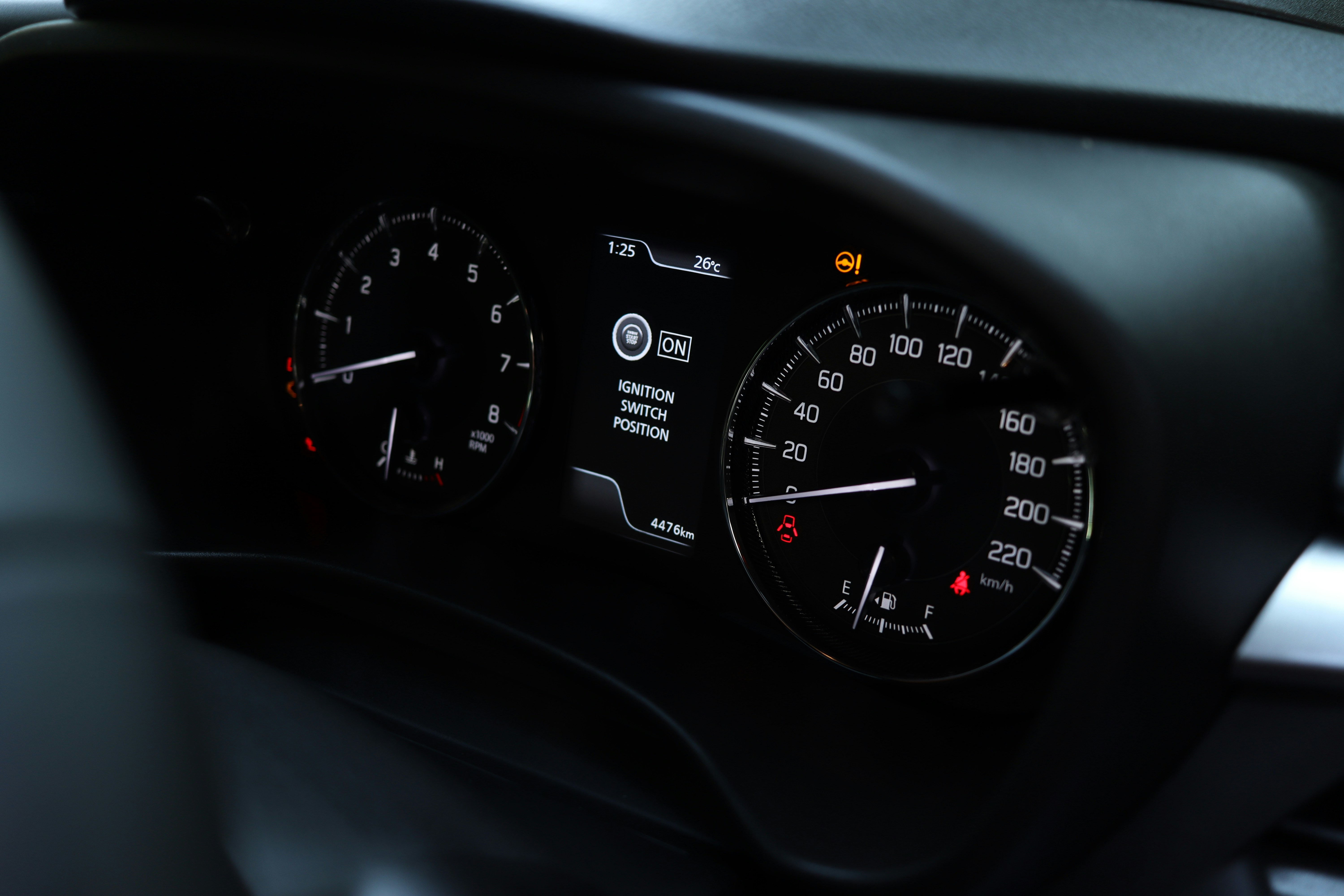
Modern vehicles are replacing analog dials with complex digital screens. For the ADHD community, this "visual noise" can lead to:
Slower reactions times to hazards.
Difficulty filtering out non-essential information.
Increased accident risk (estimated 1.23 to 1.36 times higher).
Methodology: Rigor in Design
To find a solution, I employed a within-subjects research design with six participants diagnosed with ADHD.
The Prototype:
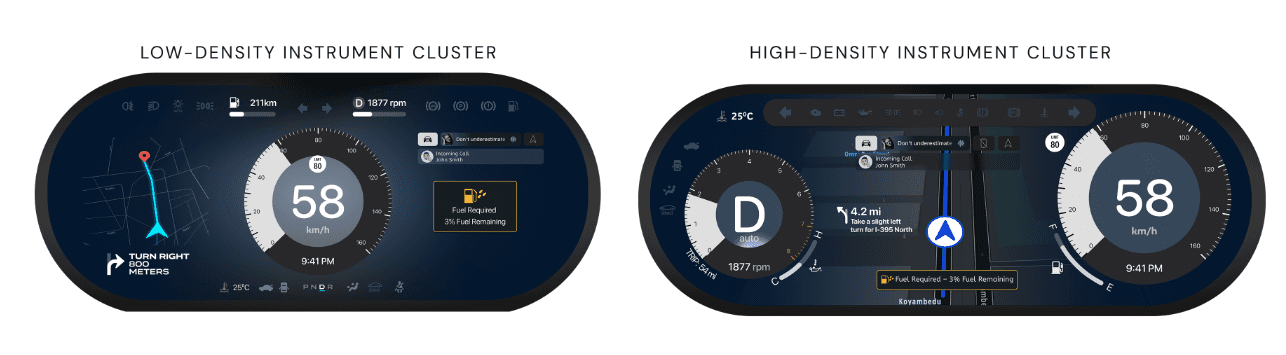
High-Density (The Baseline): Simulated current "feature-rich" dashboards with clustered data.
Low-Density (The Intervention): A minimalist interface focusing on essential, categorized information to reduce visual clutter.
The Test Environment
Tools: Mid-fidelity prototypes built in Figma.
Execution: Remote testing via Teams using the Wizard-of-OZ method to simulate interactivity.
Metrics: Used the Situation Awareness Rating Technique (SART) to quantify mental effort.
Results: Evidence-Based Design
The data was clear: Simplicity wins
Quantitative: The Low-Density design resulted in a mean SART score of 29.0, compared to 52.5 for the High-Density version. A paired-sample t-test confirmed this was statistically significant (P=.00011).
Qualitative: Participants reported the simplified interface was "easier to process" and "less distracting".
Reflection: Why this Matters
This project proves that inclusive design is a safety imperative. By designing for the "edges," in this case, neurodiverse drivers, we create systems that are more resilient and usable for everyone. This work aligns with upcoming 2026 Euro NCAP guidelines that encourage car manufacturers to simplify interfaces to keep eyes on the road.
What I’m most proud of: Taking a classroom concept through a rigorous academic peer-review process and contributing to the global conversation on neurodiversity in HCI.